
Blog
The Heart of the Armenian Duduk: Apricot Wood and Its Craftsmanship
Feb
Why Apricot Wood is Our Choice
For centuries, Armenian duduks have been made from apricot wood (Prunus armeniaca), and there’s a good reason for it. Apricot wood has a dense, fine grain that creates that soft, velvety tone you instantly recognize. It’s the wood that makes your duduk “sing” with warmth and emotion. Other woods simply can’t match its natural resonance.
But apricot wood isn’t just about tone. It’s durable, stable, and responsive—qualities that allow a well-made duduk to last for decades, sometimes even improving with age. Think of it like a vintage wine: with the right care, it only gets better.
The Art of Preparing Duduk Wood
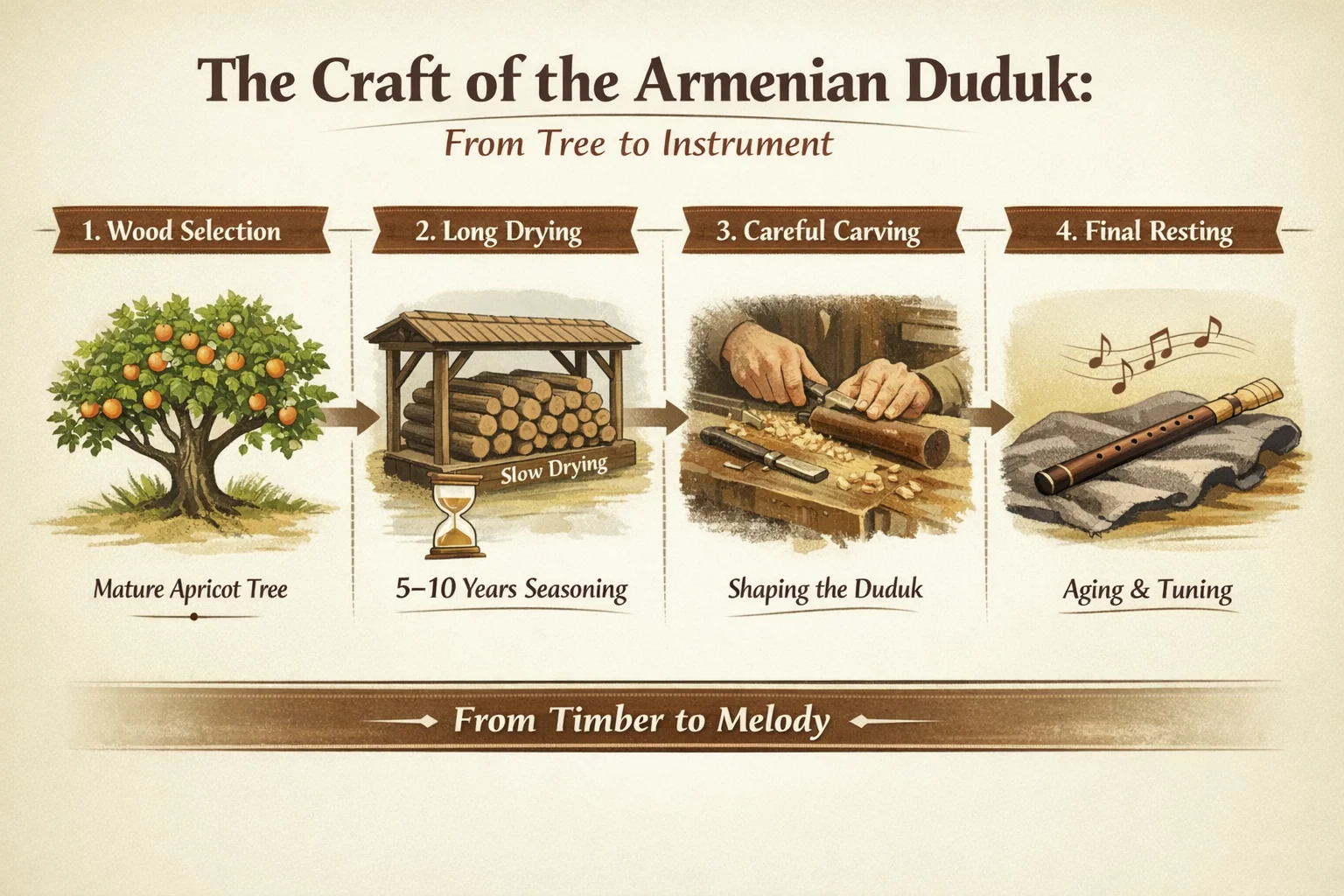
Here’s where patience comes in. A duduk isn’t just carved from any apricot tree. The wood must be carefully prepared over many years to ensure it lasts and sounds perfect. Here’s the process I follow for every professional duduk I craft:
- Selecting the Right Tree
Not every apricot tree is suitable. We choose mature, healthy trees with dense wood. Younger trees just don’t have the tonal richness we need. - Long, Natural Drying
Fresh wood has moisture that can make it crack or warp. That’s why I dry every piece for 5–10 years, slowly and naturally, in shaded, ventilated conditions. This long seasoning makes the wood stable, prevents cracking, and enhances the tone. - Shaping With Care
After aging, we carefully carve the wood into its final form. Precision matters—a small mistake can change the sound completely. Every curve, every wall thickness, every bore diameter affects how your duduk will sing. - Final Resting Period
Even after carving, I let the duduk rest for a while. This allows the wood to settle and reach perfect resonance. Only then does it truly become ready to play.
Why This Matters
If the wood isn’t properly prepared, even a beautifully carved duduk can:
- Crack or split from moisture and temperature changes.
- Lose its tuning stability, making it frustrating to play.
- Produce a dull, lifeless tone instead of that warm, soulful sound you expect.
A properly seasoned and crafted duduk, however, will reward you for decades with a rich, expressive voice that becomes more beautiful with time.
Tips for Choosing Your Duduk
If you’re looking to buy a professional duduk, keep these in mind:
- Material: Always look for genuine Armenian apricot wood.
- Wood Age: Ask how long the wood was seasoned—it makes a huge difference.
- Craftsmanship: Experienced duduk makers follow traditional techniques; don’t settle for shortcuts.
- Sound Test: Pick up the duduk and play it. Listen for warmth, depth, and clarity. That’s the apricot wood speaking!
Making a duduk is a labor of love, and so is choosing the right one. The apricot wood and its careful preparation are what give the duduk its voice—the voice that has carried Armenian melodies through centuries. Treat it well, and it will reward you with years of beautiful music.
Remember, the magic of the duduk isn’t just in your fingers—it’s in the wood, the care, and the tradition behind every instrument.